
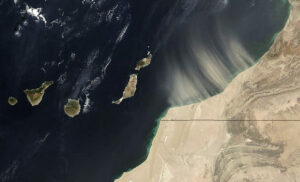
Where is Lanzarote located? It’s a simple question — at least today — but until a few decades ago, it wasn’t at all. Most people didn’t even know this island existed. Lanzarote is the northeasternmost of the Canary Islands, 125 km from the African coast and over 1,000 km from mainland Spain. It’s a volcanic island, dominated by lunar landscapes, craters, lava flows, and vineyards that grow on black ash. A place so unique that it almost seems out of this world. And perhaps because of this, for centuries, the world didn’t pay any attention to it..
The Cinderella of the Canaries
In a famous text, often attributed to César Manrique or at least to the Manriquean sensibility, Lanzarote is referred to as “the Cinderella of the Canaries”. It was not an insult: it was a perfect snapshot of reality. Until the 1950s, Lanzarote was a remote, ignored place, lacking hotels or infrastructure, far from trade routes, a name that didn’t appear in any travel brochure, almost unknown even to Spaniards. It was a silent, invisible, unrequested beauty. A Cinderella that no one invited to the ball.
The 1950s: the first signs of change
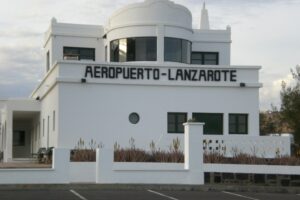
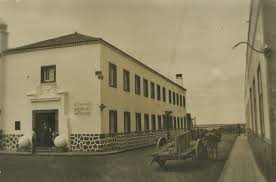
With the opening of the Guacimeta military airport to civilian traffic and the construction of the Parador in Arrecife, Lanzarote slowly began to attract attention. Geologists, drawn by volcanic phenomena, and eccentric travelers were the few visitors. During this period, local press started mentioning places like the Cueva de los Verdes, but interest was still minimal. However, something was beginning to change.
A visionary minister: Manuel Fraga Iribarne
In the 1960s, Spanish Tourism Minister Manuel Fraga discovered the island and immediately recognized its tourism potential. It was thanks to him that public funds were allocated to improve tourist infrastructure and modernize the airport. Without his vision, Lanzarote would likely have remained in the shadows, far from mass tourism.
The turning point: César Manrique and the transformation of the island
It’s impossible to talk about the tourism development of Lanzarote without mentioning him:César Manrique, the artist who transformed the island into a living work of art. Manrique, after living in New York, returned in the 1960s with an innovative vision. While the world saw a barren desert, Manrique saw:
- harmonious lines
- sculptural landscapes
- a pure natural aesthetic
- a perfect laboratory of art and nature
He was the first to realize that the strength of the island was not in what was missing… but in what was present: the lava, the silence, the wind, the light, the strength of the ocean. Together with the president of the Cabildo José Ramírez Cerdá and the brilliant Jesús Soto, Manrique transformed caves, craters, and jameos into cultural, scenic, visionary places. He didn’t build:
Insieme al presidente del Cabildo José Ramírez Cerdá e al geniale Jesús Soto, Manrique trasformò grotte, crateri e jameos in luoghi culturali, scenografici, visionari.
Non costruì: he revealed.
Thanks to that insight, Lanzarote began to be noticed. Finally, Cinderella was invited to the ball.
To discover its transformation, we suggest downloading our itinerary ‘Lanzarote between Art and History‘

1970s–1980s: The tourism boom
With the introduction of holiday packages and charter flights in the 1970s, there was a tourist explosion that brought millions of visitors to the island. Unlike other Canary destinations, this island embarked on a unique path, far from skyscrapers and construction chaos. The avant-garde commitment to regulate urbanization proved essential, preserving the natural landscape and striving to maintain environmental balance. This innovative vision culminated in 1993 with the declaration of Lanzarote as UNESCO Biosphere Reserve, a recognition that certified the uniqueness of the island as a model of sustainable development.
Lanzarote today: A global icon
Today Lanzarote has not only found its place on the map. It has found its place in the world’s imagination. And this is perhaps its most beautiful story:the story of an island that no one looked at until someone had the courage to see.To fully experience the Lanzarote experience, enter World2Wander. You will find thematic itineraries for every type of traveler, exclusive guides, unique audioguides.